Vol. 9 No. 2 (2026): Regular Issue
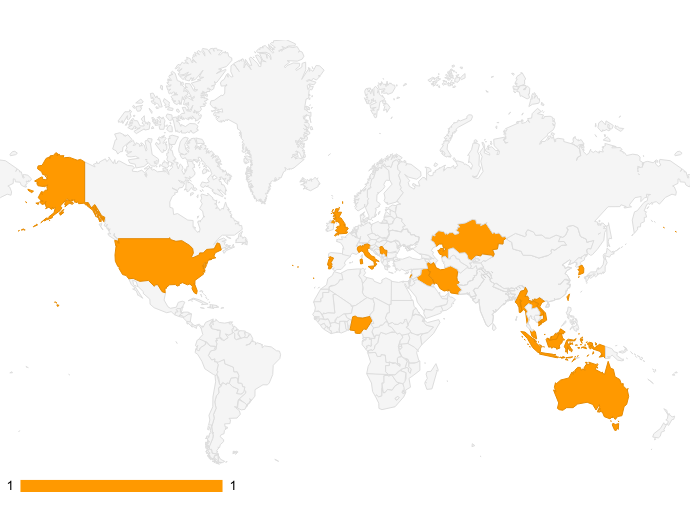
The articles published in Jurnal Pendidikan Teknologi Kejuruan Volume 9, Issue 2 (2026) present recent advances in technical and vocational education, engineering education, educational technology, environmental engineering, healthcare management, and applied engineering research. This issue brings together five research articles authored by 18 researchers from five institutions across two countries, namely Indonesia and Kazakhstan.
The contributing institutions include Institut Teknologi Bandung, Sekolah Tinggi Teknologi Industri Padang, Universitas Negeri Medan, and Universitas Negeri Padang (Indonesia), as well as Abai Kazakh National Pedagogical University (Kazakhstan). The issue reflects the journal's commitment to promoting interdisciplinary research and strengthening both national and international academic collaboration in technical, vocational, and engineering education.
The published papers address a broad range of contemporary educational and engineering topics. The issue includes a systematic literature review on personalized learning in flipped classrooms, highlighting learner-centered instructional design and adaptive learning strategies. Another systematic review synthesizes current evidence on clinical risk management in hospital workforce systems, emphasizing organizational safety and healthcare quality improvement. Environmental engineering research is represented through the spatial modeling of water pollution parameters in the Batanghari River using the Inverse Distance Weighting (IDW) method, demonstrating the application of geospatial analysis for water quality assessment and environmental monitoring. In vocational education, one study investigates the effectiveness of problem-based learning (PBL) in improving orthogonal projection drawing competencies among vocational machining students, while another evaluates the implementation of project-based learning (PjBL) integrated with the STEAM approach in woodworking practice courses. Together, these studies highlight the growing adoption of evidence-based instructional models, systematic review methodologies, and data-driven engineering approaches to improve educational outcomes and professional practice.
In line with the journal's focus and scope, this issue contributes to the advancement of knowledge in technical and vocational education and training (TVET), engineering education, educational technology, environmental engineering, healthcare management, and interdisciplinary applied research. The findings presented in these articles provide valuable scientific evidence and practical implications for educators, researchers, engineers, healthcare professionals, and policymakers seeking innovative, technology-enhanced, and sustainable solutions to contemporary educational and engineering challenges.
Published:
2026-05-31